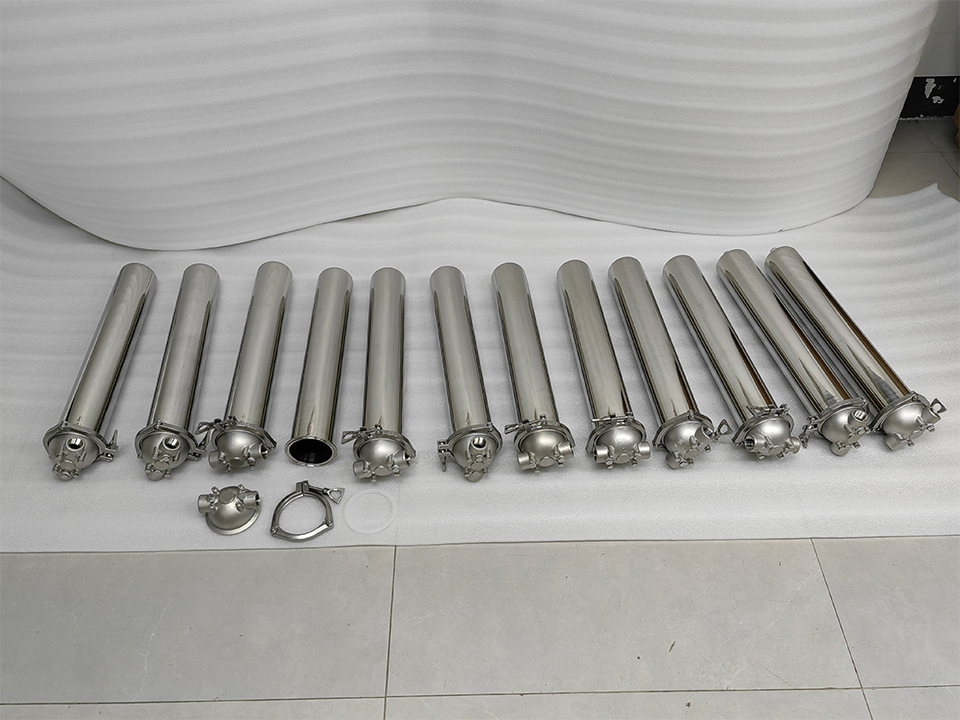
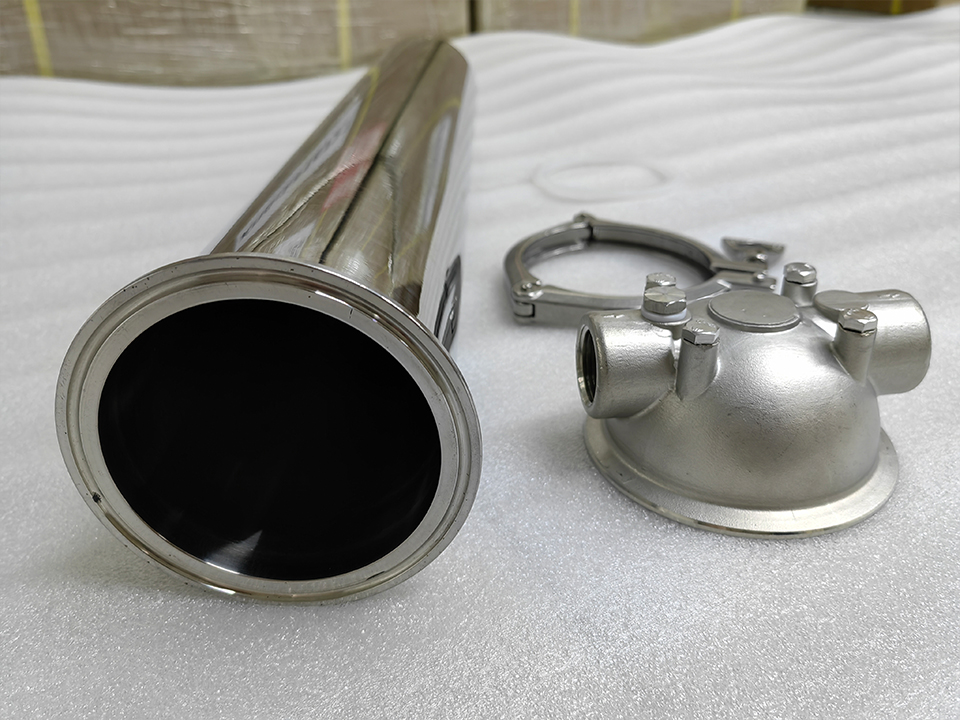
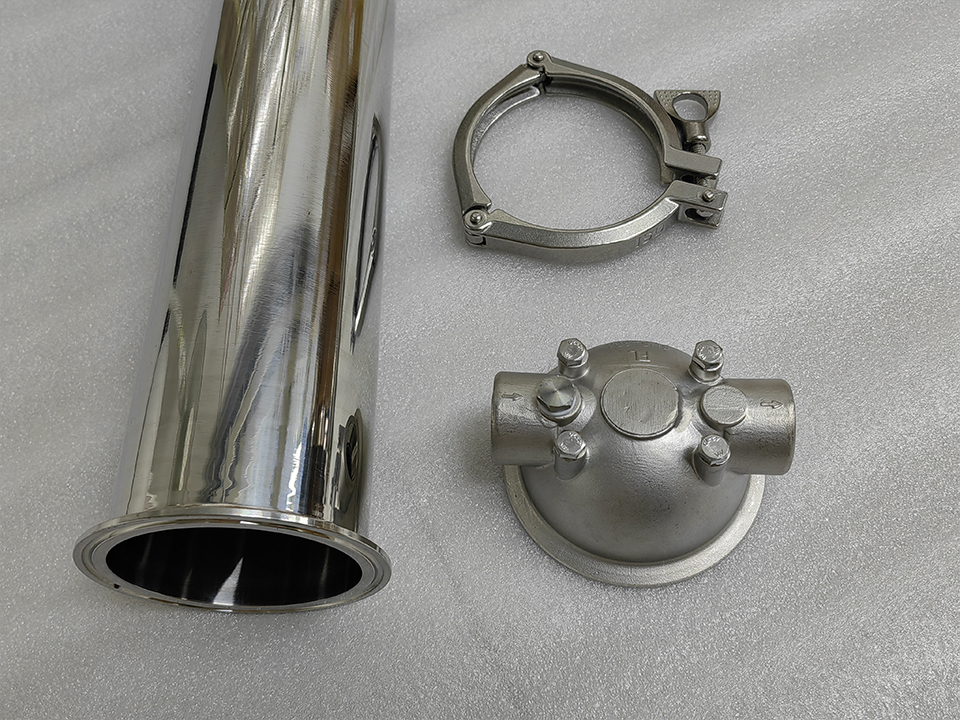
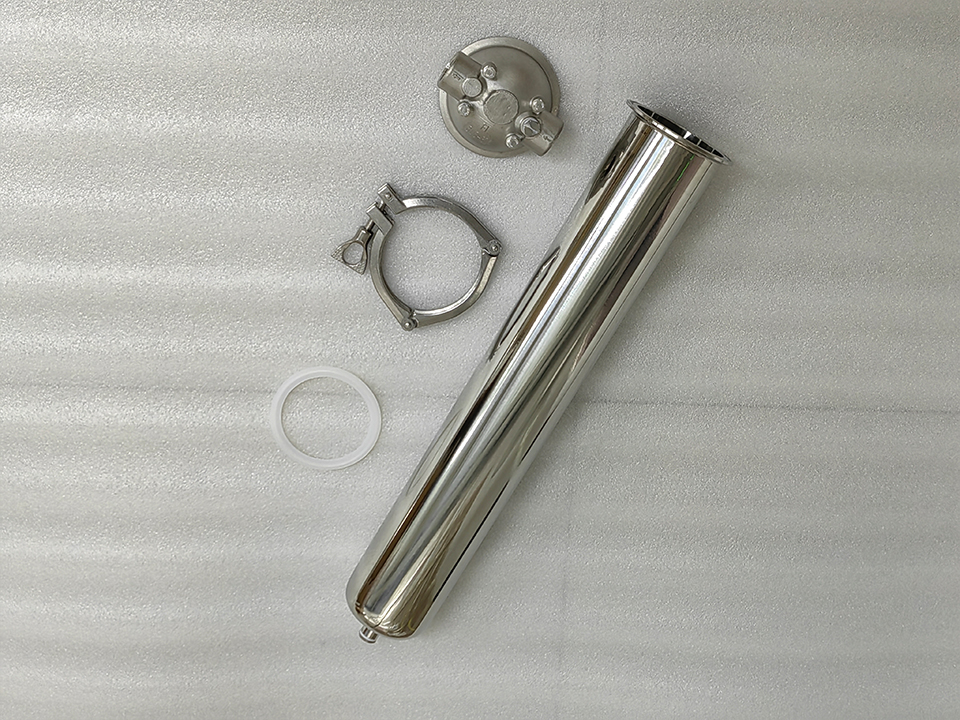
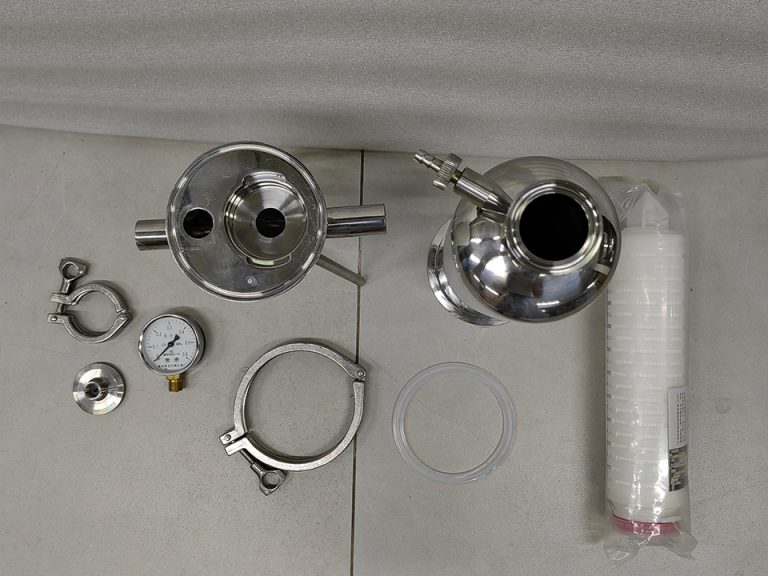
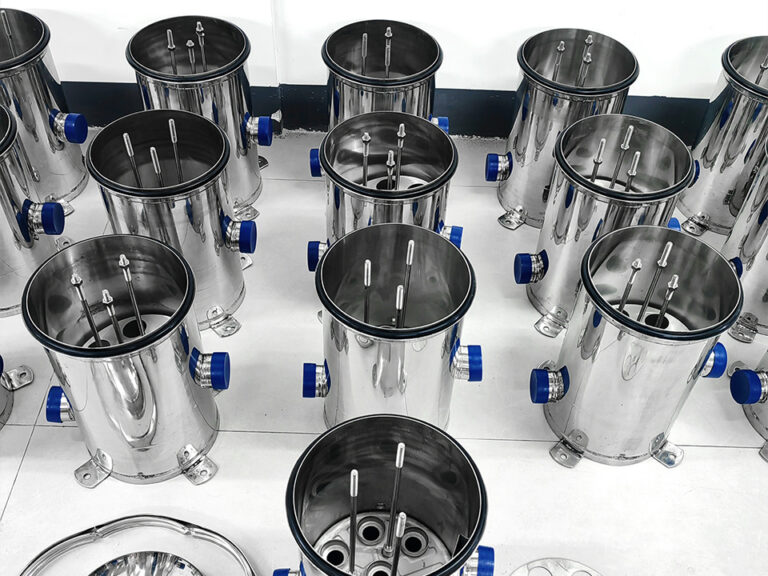
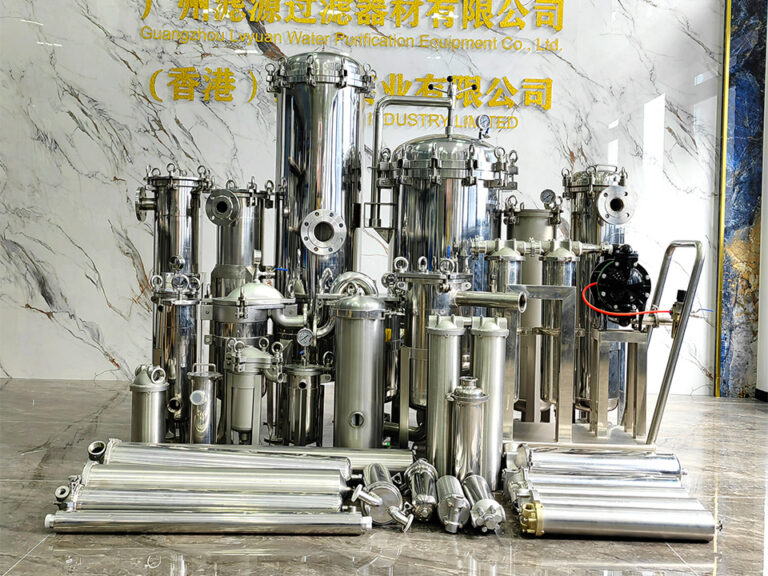
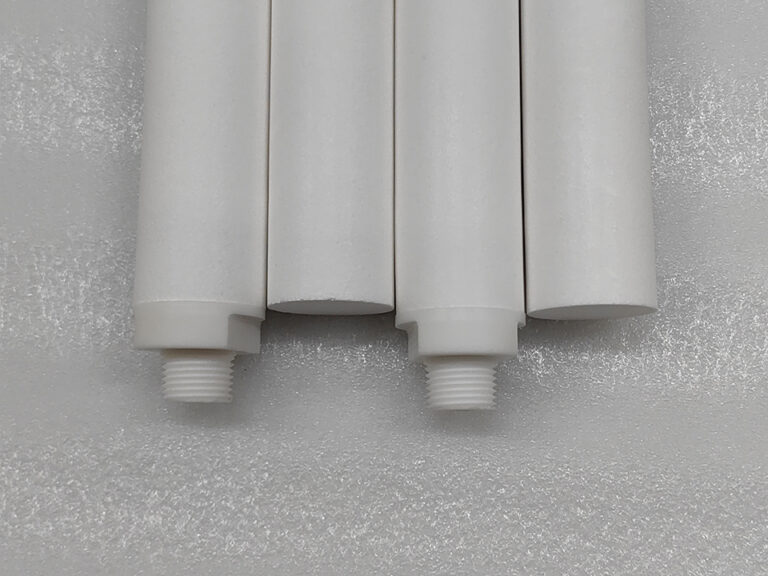
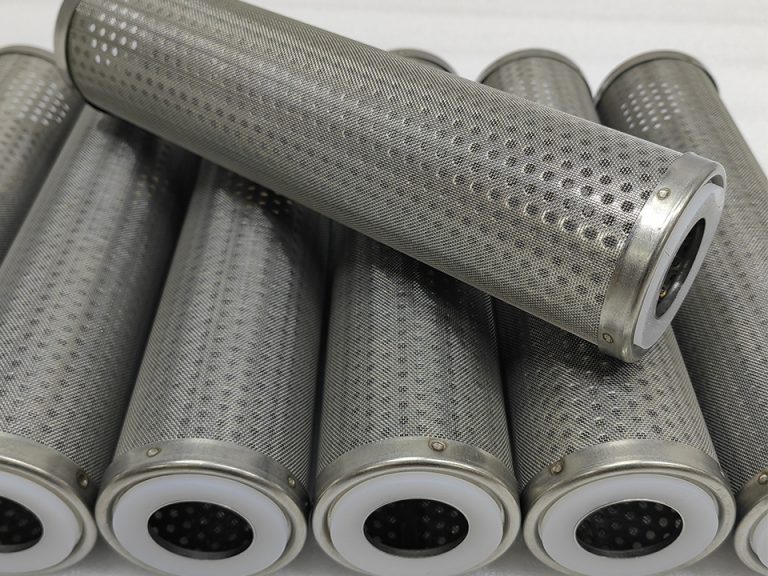
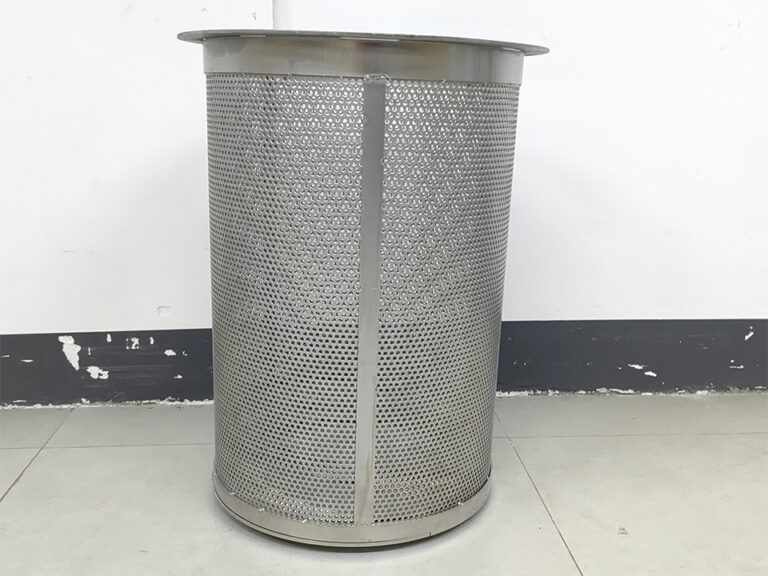
Guangzhou Lvyuan Water Purification Equipment Co., Ltd. é um fabricante de filtros industriais fundado em 2009 que projeta e fabrica carcaças de filtro de aço inoxidável, tanques de água estéril de aço inoxidável, elementos de filtro, sacos de filtro, materiais de ultra-polímero e produtos de filtro sinterizado. Os compradores escolhem a Lvyuan devido ao apoio OEM/ODM, ao controlo de qualidade ISO9001 e às certificações de vários países.
Guangzhou Lvyuan Water Purification Equipment Co., Ltd.
How to Read Filter Housing Pressure Ratings Before Importing
A filter housing datasheet that says “max 10 bar” looks like a complete answer. It is not. That figure can describe the vessel shell, the weakest connection, or a catalog limit that only holds at room temperature, and each reading leads to a different purchasing decision. For importers, a misread rating can mean a housing that leaks at operating temperature, fails a documentation check at destination, or costs more than the line needs. This guide explains how to read the pressure line on a bag or cartridge filter housing datasheet, how temperature, closures, seals and connections change usable pressure, which documents prove a rating, and what to put in an RFQ so supplier quotes can be compared on equal terms.
What Does a Filter Housing Pressure Rating Actually Tell You?
A filter housing pressure rating is the highest pressure the finished housing is allowed to see, at a stated temperature, as limited by its weakest pressure-retaining component. Three parts of that sentence matter: “finished housing,” “stated temperature,” and “weakest component.”
Finished housing. The rating belongs to the assembled unit (shell, cover, closure, seals, ports), not to the steel grade alone. SS304 or SS316L tells you about corrosion resistance and material strength. It does not tell you the pressure the welded and bolted assembly is approved for.
Stated temperature. Metals, elastomer seals and flange ratings all lose capacity as temperature rises. A pressure figure without a temperature is incomplete.
Weakest component. The shell may be rated higher than the cover closure, a threaded port, a clamp, a gauge or a gasket. The lowest of these sets the real limit.
Also confirm whether the figure is gauge or absolute pressure (“barg” vs “bara”). Do not assume; ask the supplier to state it in writing.
Operating, Design, MAWP and Test Pressure: Which Number Matters?
Datasheets and quotations often put several pressure terms next to each other. They are not synonyms. Kezar Engineering’s explanation of MAWP, design pressure and operating pressure describes operating pressure as a process condition, design pressure as the mechanical design basis, and maximum allowable working pressure (MAWP) as the limit of the completed vessel at a specified temperature. Its worked example, with 10 barg operating, 12 barg design and 13.5 barg MAWP, shows how all three numbers can be correct at once.
Term on the datasheet
What it describes
Who normally sets it
What a buyer should ask
Pressão de funcionamento
Pressure in normal use, in your process
Your process engineer
Normal and maximum values, including pump start-up and valve closure
Pressão de projeto
Pressure used for the mechanical calculation
Specified by buyer or manufacturer
Coincident design temperature and whether it is gauge pressure
MAWP / rated working pressure
Limit of the completed housing at a stated temperature
Manufacturer under the governing code
Is it on the nameplate, and for which component and temperature?
Pressão de ensaio
Pressure applied during fabrication testing to prove integrity
Governing code and manufacturer
Request the test record: actual pressure, hold time, date, unit serial number
Pressão diferencial
Pressure drop across the bag or cartridge
Set by flow, media and fouling
Maximum dP from the bag or basket supplier, not from the housing rating
The practical rule: maximum operating pressure, including transients, should sit below the housing’s rated pressure at your operating temperature, with a margin your engineer chooses. A housing marked “10 bar” has a 10 bar ceiling; it is not a 10 bar duty housing.
Why housing pressure and differential pressure are different checks
A bag filter housing sees two different loads. The first is line pressure on the shell and cover. The second is differential pressure across the bag, which the perforated support basket carries as the bag loads with solids. The housing rating does not cap the bag’s differential pressure limit. Bag manufacturers specify their own maximum dP and changeout guidance, and the basket design affects what the assembly tolerates. Ask for both.
How Temperature Changes the Usable Pressure
Pressure rating and temperature move together. The industrial single-bag unit in this range is listed at up to 10 bar and temperatures up to 120°C “when the selected gasket and filter bag materials are suitable,” and the same page names NBR, EPDM, silicone, FKM and PTFE as gasket options. That wording is useful, because it shows the temperature figure depends on seal and bag choice. Read the industrial stainless steel single bag filter housing specification the same way: the 10 bar and 120°C numbers are ceilings for the housing platform, and your actual limit is whichever component fails first at your fluid temperature.
Check these four items when temperature is above ambient:
Elastomer seals. Gasket compounds have their own temperature and chemical compatibility limits. A seal that suits hot water may swell in solvents or oils.
Filter bag media. PP, PE and nylon bags have different temperature tolerances, so the bag can be the limiting item before the vessel is.
Conceção do fecho. Tri-clamp connections depend on clamp type, size and gasket. Ask for the rating of the clamp assembly at line size rather than assuming it matches the shell. The sanitary tri-clamp bag filter housing page, for example, lists a lower maximum temperature (95°C) than the swing-bolt designs listed at 120°C, a reminder that closure and connection choices change the envelope even when headline pressure matches.
CIP or steam cleaning. If the housing will be cleaned hot, state the cleaning temperature and duration in the RFQ. Operating temperature alone may understate the thermal load.
Which Component Limits the Rating?
The weakest-component rule is where most import surprises start. Four areas deserve a direct question to the supplier.
Shell, dome and cover closure
Swing eye-bolt covers are common because they allow full access for bag changes. The domed-cover single bag housing page describes a raised cover secured by swing eye-bolts and a full-opening cover, and the same pressure ceiling applies to the complete assembly, not just the dome. Ask whether the closure, cover seal and bolts were part of the design calculation or test, and whether the unit suits repeated opening cycles.
Entry style and connections
Entry style does not change the rating by itself, but the connection you pick does. The caixa de filtro de saco em aço inoxidável com entrada lateral is offered with flanged, threaded or sanitary connections, and its page notes that temperature limit and chemical compatibility depend on the selected bag and gasket. Threaded ports, tri-clamp ferrules and flanges can each carry different allowable pressures at the same line size. The top-entry bag filter housing is listed with 2″ and 3″ or customized flanged ports and a pressure gauge and vent connection; if you request a custom flange, confirm its rating matches the shell’s.
Flange class and PN: not the same as the housing rating
A flange class number is a designation, not an operating pressure. PipeData’s pressure-temperature rating reference points out that a Class 150 flange is not rated for 150 psi: in carbon steel it is listed at 285 psig at 100°F, falling to 140 psig at 600°F, and stainless steel groups follow their own tables. PipeData is an independent reference that reproduces standard data, so verify the final figures against the current ASME or EN standard. The principle for buyers holds either way: a “PN16” or “Class 150” port on a quote needs a material group and a temperature before it means anything, and the flange rating at your temperature should not be lower than the housing’s rated pressure.
Large multi-bag vessels
Larger covers and larger port sizes raise the stakes. The multi-bag stainless steel filter housing range covers 3 to 12 bags with 2″ to 8″ flanged connections and accessories such as a pressure gauge, vent valve, drain valve and lid lifting device. On a vessel this size, ask for the drawing or calculation summary that shows how cover and nozzle loads were handled. Check the gauge, vent and drain valve ratings too, because auxiliary fittings are part of the pressure boundary, and choose a gauge range that suits the housing limit.
Bar, psi, MPa and PN: Unit Traps in Datasheets
Unit conversion errors create false confidence. One bar equals about 14.5 psi, so 10 bar is about 145 psi, and 16 bar is about 232 psi. A figure shown as “150 psi” in one listing and “145 psi” in another may be the same 10 bar housing, rounded differently. The nameplate and quotation should carry one defined unit. One MPa equals 10 bar. Older documents may use kgf/cm², close to but not exactly one bar.
Require the quotation to repeat the rating in the unit your destination authority or end customer uses.
Reading a Real Product Range: Same Headline Pressure, Different Conditions
The table below uses the housing pages linked in this article, as listed when they were reviewed in October 2026. Listings can change, so confirm every value in the quotation.
Estilo de habitação
Pressure as listed
Temperature as listed
What to confirm before ordering
Industrial single bag
Máx. 10 bar (150 psi)
Up to 120°C, depending on seal and bag
Gasket compound at your temperature; unit used on the nameplate
Sanitary tri-clamp single bag
Máx. 10 bar (145 psi)
Máx. 95 °C
Rating of clamp, ferrule and gasket at line size
Domed-cover single bag
Máx. 10 bar (145 psi)
Máx. 120 °C
Cover and eye-bolt design basis; opening-cycle suitability
Side-entry single bag
Até 10 bar
Até 120 °C
Rating of the selected flanged, threaded or sanitary connection
Top-entry single bag
Máx. 10 bar (145 psi)
Máx. 120 °C
Custom flange rating; gauge range
Multi-bag (3–12 bags)
Máx. 10 bar (150 psi)
Not listed on page
Temperature rating; cover and nozzle design basis
20″ Big Blue cartridge housing
Not listed on page
Not listed on page
Pressure and temperature rating, clamp-ring rating, test record
Two things stand out. First, the bag housings share a 10 bar ceiling but have different temperature envelopes, so “10 bar” cannot be compared without the temperature beside it. Second, a rating can be absent altogether. The 20-inch Big Blue stainless steel cartridge housing page describes a clamp-ring closure and threaded ports but does not list a pressure figure. For an importer, a missing number is a question to put to the supplier before quoting, never an assumption. Do not carry a rating from one product family to another.
Do You Need a Certified Pressure Rating for Import?
It depends on the destination market, the fluid, the size of the vessel and the end user’s requirements. A stated rating tells you what the manufacturer claims. Certification and documentation tell you what has been assessed.
For the European Union, the summary of Directive 2014/68/EU on pressure equipment states that the directive applies to pressure equipment with a maximum allowable pressure greater than 0.5 bar, covers equipment new to the EU market whether made inside or outside the EU, and makes importers and distributors, not only manufacturers, responsible for compliance. A 10 bar filter housing therefore sits above the scope threshold. Whether it needs CE marking and a notified-body procedure, or falls under sound engineering practice with no CE mark, depends on the directive’s classification, which looks at the fluid group, fluid state, maximum pressure and vessel volume. Ask the manufacturer for its written PED classification and the supporting module, not just a CE logo.
Other destinations differ. Some US end users specify ASME BPVC Section VIII code-stamped vessels, and some Canadian provinces may require design registration for pressure vessels. Check requirements with your customs broker, the local pressure-equipment authority or the end customer’s specification, and write them into the RFQ.
When a higher rating is not the better purchase
The common assumption is that the highest listed pressure is the safest choice. That is not always true. A higher pressure class often means heavier wall and flange thickness, more weld and inspection work, longer documentation and a higher price. If your line normally runs at 3 to 4 bar with a defined relief device and controlled pump behavior, a housing with a clear 10 bar rating and complete test records may serve you better than a more expensive, higher-rated unit. Conversely, a low-priced housing marked “10 bar” with no code reference, no test record and no stated temperature is not equivalent to a documented one, even if the headline number is identical. Choose on documented rated pressure at your temperature, plus the paperwork your market requires, not on the biggest number.
An illustrative scenario (not a real customer case). A buyer receives two quotes for a single bag housing, both showing “10 bar.” Quote A states 10 bar at 120°C with FKM seals, includes a hydrostatic test certificate for each unit, and names the governing design code. Quote B shows “10 bar” with no temperature, no seal material and no test record. The buyer’s process runs at 85°C with a solvent-based coating. Quote A can be checked against the process. Quote B cannot, and a lower unit price may reverse after the first leak, seal replacement or rejected delivery.
Pressure Rating Documents to Request Before Importing
Ask the supplier to provide, before purchase order and again with shipment:
Datasheet or drawing showing design pressure, design temperature and the rated pressure at each temperature, with units defined.
Nameplate details you expect on the unit: rated pressure, temperature, serial number, year of manufacture and manufacturer identification.
Hydrostatic or pressure test record by serial number, showing test pressure, hold time and result.
Certificados de materiais for pressure-retaining parts (for example, SS304 or SS316L plate and flanges), where your end user requires material traceability.
Declaration or certificate appropriate to your market, such as a PED conformity document, code data report or equivalent, as determined above.
Seal and bag compatibility statement for your fluid and temperature.
O que devem os compradores especificar antes de solicitar um orçamento?
A precise RFQ lets suppliers quote the same product. Include:
Fluid, concentration and viscosity, since these determine seal and bag compatibility.
Normal and maximum operating pressure, in barg, including pump start-up, valve closure and relief settings.
Normal and maximum temperature, including any hot cleaning or sterilization cycles.
Required rated pressure at design temperature, and your preferred margin, set by your engineer.
Bag or cartridge size and maximum differential pressure from your media supplier.
Connection type, size and rating (flange standard and class or PN, thread standard, or tri-clamp size).
Closure type and frequency of opening.
Target market and required certification, such as CE under PED, ASME stamping or other.
Accessories and their ratings: gauge range, vent and drain valves.
Required test records and nameplate language, plus packaging and shipping protection for polished surfaces and connections.
Send these details with your destination country so the proposal addresses rated pressure, temperature, documents and lead time in one response.
Perguntas mais frequentes
What does “max 10 bar” mean on a filter housing datasheet?
It usually means the housing’s highest allowed working pressure, but only under stated conditions. Confirm the temperature, whether it is gauge pressure, and whether the weakest component, such as the closure, gasket or connection, supports the same pressure.
Is the pressure rating the same as the pressure I can operate at?
No. Operating pressure is the process condition, while the rating is the ceiling. Keep maximum operating pressure, including pump start-up and valve closure transients, below the rated pressure at your operating temperature, with a margin chosen by your engineer.
How does temperature affect a filter housing’s pressure rating?
Higher temperature reduces the pressure that metals, flanges and elastomer seals can safely support. A rating is meaningful only with its temperature, and the filter bag or gasket often limits the assembly before the stainless steel shell does.
How many psi is 10 bar?
Ten bar is about 145 psi. Some catalogs round it to 150 psi. Neither figure replaces the nameplate value, so ask the supplier to state the rating in one defined unit and specify gauge or absolute pressure.
Does a Class 150 flange mean the housing is rated for 150 psi?
No. A flange class is a designation, and its allowable pressure depends on material group and temperature. The flange rating at your operating temperature should be at least equal to the housing’s rated pressure.
Do filter housings need CE marking or ASME stamping to be imported?
It depends on destination, size, fluid and end-user requirements. In the EU, the Pressure Equipment Directive applies above 0.5 bar maximum allowable pressure, then classification determines CE marking. Confirm local requirements before ordering and request the supplier’s written classification.
What test documents should I request for an imported filter housing?
Request the pressure test record by serial number, showing test pressure, hold time and result, plus the datasheet with rated pressure and temperature and applicable material and conformity documents. Agree on nameplate wording before production.