Guangzhou Lvyuan Water Purification Equipment Co., Ltd. é um fabricante de filtros industriais fundado em 2009 que projeta e fabrica carcaças de filtro de aço inoxidável, tanques de água estéril de aço inoxidável, elementos de filtro, sacos de filtro, materiais de ultra-polímero e produtos de filtro sinterizado. Os compradores escolhem a Lvyuan devido ao apoio OEM/ODM, ao controlo de qualidade ISO9001 e às certificações de vários países.
Guangzhou Lvyuan Water Purification Equipment Co., Ltd.
How to Buy Filter Housings for Pharmaceutical Water Systems Guide
A filter housing for a pharmaceutical water system looks like a simple stainless steel vessel, yet the same housing can be a sound choice in one location and a contamination risk in another. A cartridge housing that protects an RO feed line faces different demands from one installed in a purified water distribution loop. A strainer that suits a utility line may be unsuitable anywhere the water must stay under microbiological control. This guide helps procurement managers, utility engineers and QA or validation teams match housing type, material, surface finish, connections, drainability and documentation to the position in the water system. It also shows how to write an RFQ that produces quotations you can compare, and it separates what guidance documents actually say from supplier marketing language.
Where Does the Filter Housing Sit in the Water System?
The location of the housing, not the word “sanitary” on a datasheet, determines the specification. Pharmaceutical water systems have a protective pretreatment section and a hygienic section, and the two are held to different construction standards. The WHO guidance on water for pharmaceutical use (TRS 1033, Annex 3) notes that construction standards for purified water and bulk water for injection systems are generally aligned with potable water standards up to the process stage, such as RO. The stricter hygienic construction guidance applies to the stages after that point.
Purpose matters as much as position. The FDA Guide to Inspections of High Purity Water Systems states that if filters are used in a water system, there should be a stated purpose for each one, such as particulate removal or microbial reduction, and an SOP for the change frequency based on validation data. A buyer who cannot state the filter’s purpose cannot specify the housing.
System location
Typical filtration purpose
Housing priorities
Common specification error
Feed water and pretreatment (before RO or other treatment steps)
Protect pumps, membranes, heat exchangers and downstream media from particles
Corrosion resistance, pressure rating, easy element or basket change, reasonable cost
Paying for electropolishing and BPE-style finish where it adds no control benefit
Purified water or WFI storage and distribution loop
Particulate control or, where justified and validated, microbial reduction
Full hygienic design: drainable geometry, sanitary connections, defined finish, traceable materials
Choosing a housing with threaded ports or non-drainable pockets because it is “stainless”
Use-point filtration
Final particulate or bioburden control as defined by the process
Compact sanitary housing, vent and drain access, validated change-out routine
Fitting a filter that masks upstream contamination without a stated purpose
Tank vent
Bacteria-retentive barrier on the storage tank vent
Hydrophobic element, integrity-test access, protection from condensate blocking
Treating a gas vent housing like a liquid housing
Portable transfer, flushing or commissioning
Temporary filtration between tanks, skids or loops
Mobility, quick connections, cleanability between uses
Using a general-purpose cart in a validated loop without a cleaning procedure
What Makes a Filter Housing Suitable for Pharmaceutical Water Service?
Four design features decide whether a housing belongs in the hygienic section: wetted material, surface finish, connections and drainability. Each one can be specified and verified.
Material and passivation
The WHO guidance says materials of construction should be non-leaching, non-adsorbing, non-absorbing and corrosion resistant, and that 316L stainless steel is generally recommended. The material should also suit the intended sanitization method. For purified water and WFI contact surfaces, specify 316L for all wetted parts and ask for heat-lot material test reports.
SS304 is a defensible, cheaper option in some protective pretreatment duties where the water is potable-grade. Check chloride content and any sanitizing chemicals before accepting it. The WHO text also advises considering passivation for non-electropolished stainless steel after installation and after significant modification, following a documented procedure. If a housing is mechanically polished only, ask who performs passivation and how it is documented.
Acabamento da superfície
“Mirror polished” is not a measurable specification. A usable finish requirement states a maximum Ra value, the process (mechanical polish or mechanical polish plus electropolish) and the surfaces covered. ASME BPE surface finish designations, as summarized by a finishing specialist, run from SF1 (mechanically polished, maximum Ra 20 µin or 0.51 µm) to SF4 (mechanically polished and electropolished, maximum Ra 15 µin or 0.38 µm). That source advises confirming values against the edition your specification references. WHO separately recommends sample valves with surface roughness of 1.0 µm Ra or lower for PW and WFI systems.
Finishing adds cost. Reserve electropolished, measured finishes for hygienic-section housings and avoid paying for them on pretreatment strainers.
Connections and closures
The WHO guidance says joints in purified water and WFI systems should use sanitary connections, for example hygienic clamp joints, and that threaded joints should not be permitted. That single sentence rules out many industrial housings for the distribution loop, however well they are polished. Flanged connections are common in pretreatment and utility lines, where they suit higher flows and larger line sizes.
For the closure, ask how the cover seals. Check whether the gasket sits in a machined groove, whether the lid area has crevices where liquid can stagnate, and which elastomer is used. Gasket material should be selected against the sanitizing agent and temperature, not just pressure.
Drainability and dead legs
WHO guidance calls for hygienic design, zero dead leg diaphragm valves where possible, minimized dead legs elsewhere, and pipework installed for full drainage, with a guidance slope of not less than 1/100. The FDA guide adds a warning aimed squarely at housings: in one purified water example it observed that the filter housing can provide a good environment for microbiological contamination.
When you review a housing drawing, trace the water. Look for a low-point drain, a high-point vent, an outlet that does not leave a standing pool, and instrument ports that do not form side pockets. Ask what remains in the housing when it is drained for an element change.
Which Housing Type Fits Which Job?
The table compares common stainless steel housing formats. The “listed configuration” column reflects what the product pages for this range state. Those pages do not state pharmaceutical GMP, ASME BPE or similar compliance, so treat the right-hand column as questions to put to any supplier, this one included.
Housing type
Função mais adequada
Listed configuration (supplier product pages)
What to verify for water service
Sanitary single-round cartridge
Use-point or small-flow filtration
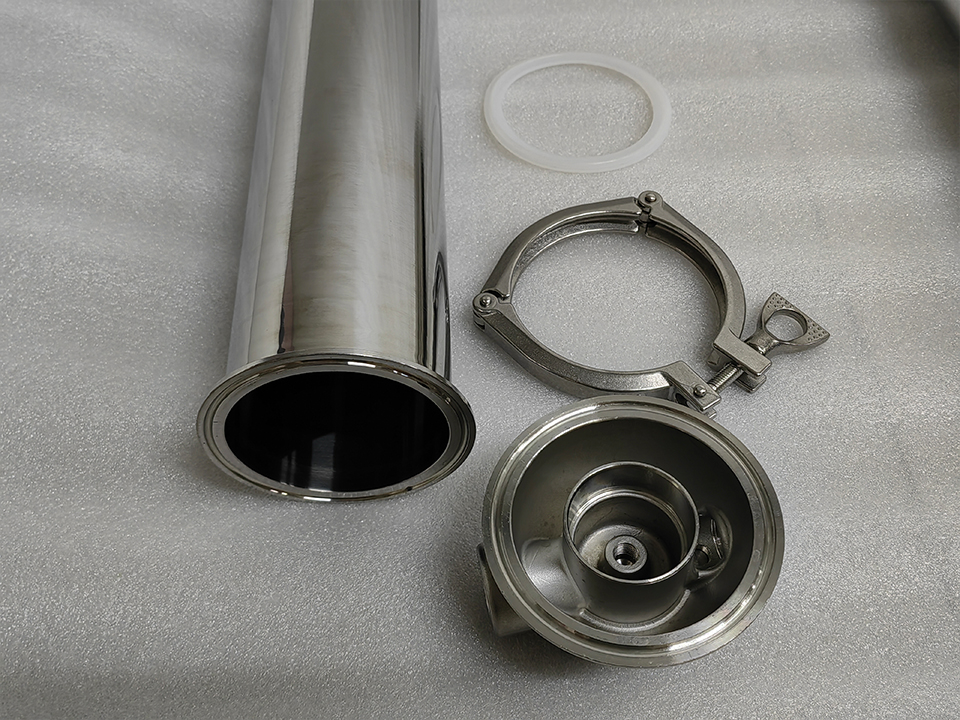
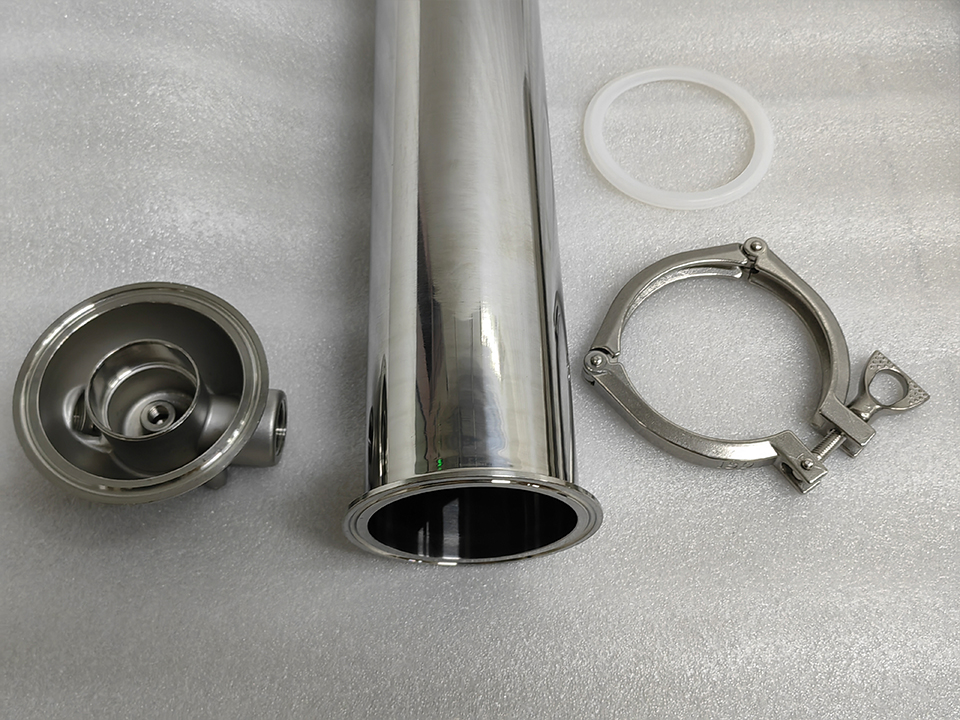
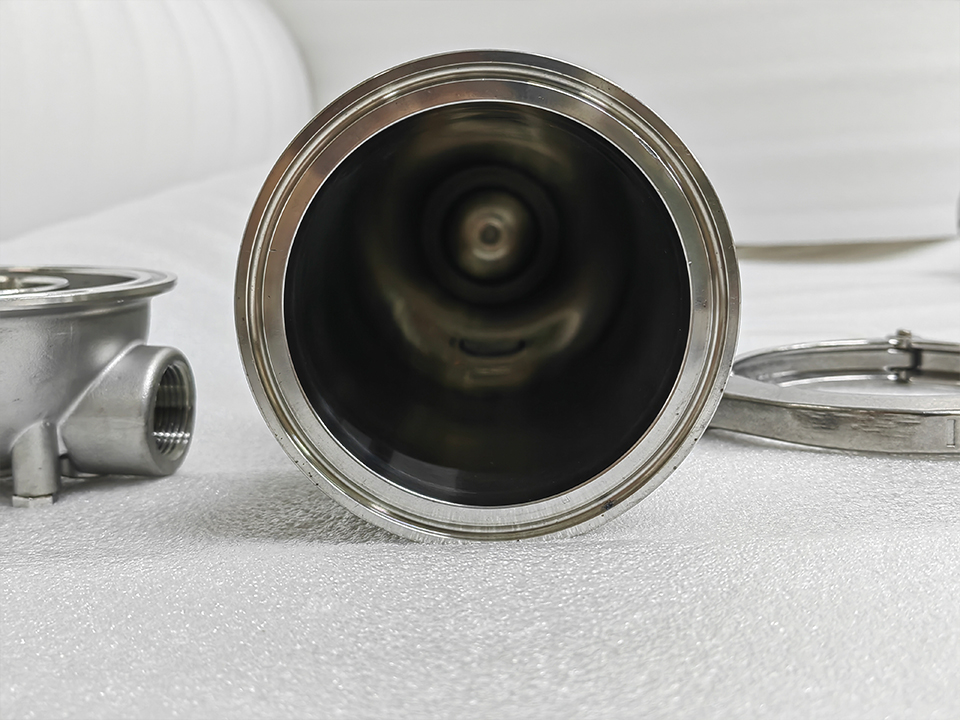
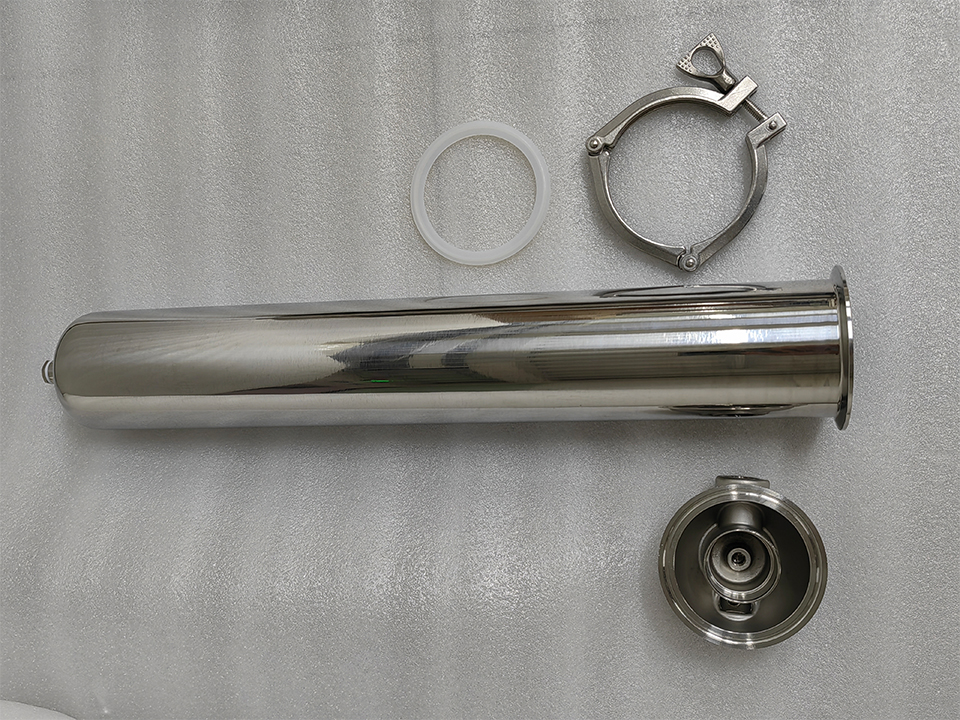
Vertical single round, clamp-band closure, pressure gauge and vent port, polished surface, sanitary clamp connections
Material grade, Ra value and process, drain provision
Sanitary multi-round cartridge
Higher-flow cartridge filtration
3–12 cartridges, 10–40″ lengths, DOE, 222/SOE or 226/SOE, 1.5–3″ Tri-Clamp, SS304/316L, mirror or electropolished
Drain and vent design, cartridge seal compatibility, real ratings with your cartridge
Threaded ports conflict with the WHO position on hygienic loop joints
Side-entry bag housing
High-solids prefiltration
One supported bag, #1 or #2 standard sizes, 1–200 µm, flanged, threaded or sanitary connections
Bag sealing and bypass; media shedding
Carrinho de filtração móvel
Portable transfer, flushing or commissioning
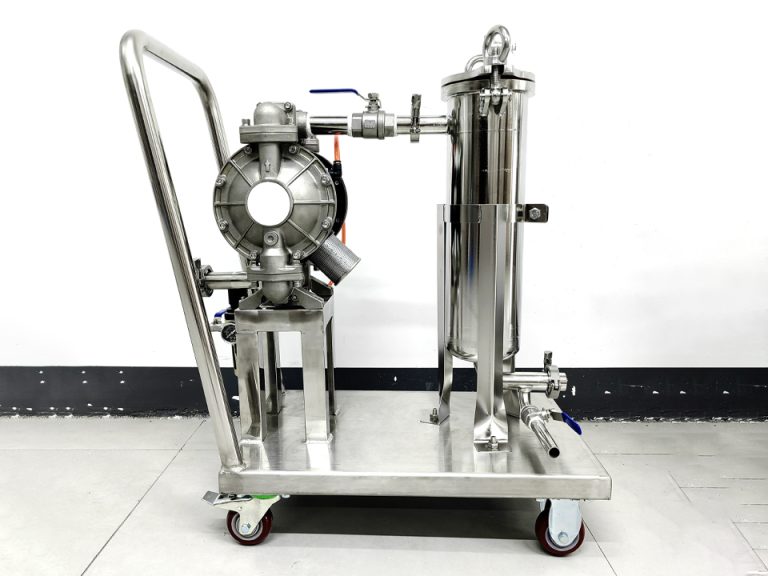
Housings, pump, valves and gauges on a wheeled frame, 0.2–100 µm, 5–50 GPM, max 6 bar and 80°C
Cleaning between uses; 80°C limit versus your sanitization temperature
Cartridge housings
For use-point or small-flow duty, the sanitary single-round cartridge housing is the compact format, with a clamp-band closure and a top gauge and vent port. When flow rises, a caixa de cartuchos múltiplos para uso sanitário spreads it across 3–12 elements. Its listed 10 bar and 150°C ratings depend on the cartridge and sealing material selected, so the housing rating is a ceiling, not a working limit. Confirm the end-cap style (DOE, 222 or 226) before ordering elements.
By contrast, a caixa de filtro de cartucho único em aço inoxidável with female threaded inlet and outlet is a practical choice for utility or pretreatment duty. The WHO position on threaded joints makes it a poor fit for a validated purified water loop.
O flanged sintered cartridge housing is described for gas, steam and liquid industrial duty with a bolted cover. Its flanged connections point to utility lines rather than hygienic water distribution.
Strainers
Strainers protect equipment; they do not control bioburden. A filtro em Y sanitário de aço inoxidável with a removable basket and Tri-Clamp connections suits protecting pumps, valves and meters. For lines that cannot be shut down for basket cleaning, the sanitary duplex filter housing allows one chamber to be isolated while the other stays in service.
The duplex format has a hygiene trade-off that buyers often miss: the idle chamber can hold stagnant water unless the design and procedure drain or flush it. Ask the supplier how the standby side is drained and what dead space the isolation valves create.
For utility and pretreatment lines, the coador de cesto em aço inoxidável with swing-eye-bolt cover and the larger-diameter industrial basket strainer are both listed with flanged connections (the former also with NPT or BSP threads) and filtration down to 40–50 µm. They are suited to prefiltration and equipment protection rather than fine polishing.
Bag housings and mobile carts
When pretreatment water carries a heavy solids load, a caixa de filtro de saco em aço inoxidável com entrada lateral can take the bulk of the particles ahead of cartridges, which extends cartridge life. For commissioning, flushing or transfer between vessels, a carro móvel de filtração em aço inoxidável integrates housings and a pump. Its listed 80°C limit equals the top of the 65–80°C range the FDA guide associates with self-sanitizing hot systems, so it leaves no margin for a hot-water sanitization cycle at that temperature.
Is a Finer Filter Always Safer in a Purified Water Loop?
No. Adding a 0.2 µm filter to a purified water line is not a safe default, and it can hide problems. In its discussion of purified water systems, the FDA guide observes that 0.2 micron point-of-use filters can mask the level of microbiological contamination in a system. It also notes that a filter will reduce microbiological contamination but not necessarily endotoxin contamination, and that unless the water is sampled before the final filter, microbiological testing has little meaning.
A finer rating therefore does not translate directly into better water quality. It adds a housing, a wetted surface, a change-out routine and a sampling question. Where a bioburden filter is justified, it should have a defined purpose, a validated change frequency, and a sampling plan that shows what happens upstream. The FDA guide also cites water hammer: if a valve downstream is closed too quickly, pressure reversal can cause “ballooning” of the filter, so valve operation belongs in the design review.
How Do You Size and Rate a Housing?
Sizing starts with flow, but pressure drop, temperature and sanitization method complete the picture.
Flow and element count. Maximum flow per cartridge depends on the element type, micron rating and acceptable clean differential pressure. Ask the supplier for the pressure-drop basis of any flow figure, and whether it assumes your cartridge or a reference element.
Pressure and temperature. Housing ratings and element ratings differ. A listed 10 bar and 150°C for a housing cannot be assumed to apply once a polymer cartridge and elastomer gasket are fitted. Specify the highest pressure and temperature seen during operation, upset conditions and sanitization.
Sanitization method. Hot-water and chemical sanitization place different loads on gaskets and cartridges. Give the supplier the temperature, concentration and contact time you plan to use.
Change-out access. The WHO guidance expects a defined maintenance frequency for system elements such as filters, so check clearance for element removal and whether the legs and frame suit your skid layout.
What Documents Should a Pharmaceutical Water Buyer Request?
Documentation is part of the product. Ask for these items in the quotation, and note which ones your quality system requires:
Material test reports with heat-lot traceability for wetted stainless steel parts.
Surface roughness report showing measured Ra values, the process used and the surfaces measured.
Passivation or electropolishing records, where the finish is specified.
General arrangement drawing showing drain, vent, gauge ports, orientation and connection standards.
Gasket and O-ring material statements, including any compliance documentation your quality system needs.
Pressure test and weld inspection records, plus cartridge compatibility confirmation for your element format.
Cleaning and packaging method for sanitary ports before shipment.
If a product page or quotation does not mention a certificate or measured value, do not assume it exists. Request it in writing before the purchase order.
What Should You Include in an RFQ for Pharmaceutical Water Filter Housings?
A complete RFQ prevents the mismatch where one supplier quotes an industrial housing and another a hygienic one, making the prices incomparable.
Campo «RFQ»
Porque é importante
Water grade and system location (pretreatment, purified water loop, WFI, use point)
As a hypothetical example, imagine a buyer who orders a polished single-cartridge housing with threaded ports for a new purified water loop because it is the lowest quote. During design review, the validation team flags the threaded connections and the lack of a drain at the low point. The housing is replaced, and the project loses weeks. A one-page RFQ with the system location and connection standard would have excluded it before quotation.
What Should You Verify Before Selecting a Supplier?
Before placing an order, confirm these points with each shortlisted supplier:
Which position in the water system each quoted housing is intended for.
The exact wetted material grade and finish specification, with measurement method.
Connection standard and closure design, including gasket material.
How the housing drains and vents, and what remains after drainage.
Whether the quoted pressure and temperature ratings apply with your cartridge and seals.
Which documents are included, and which cost extra.
Whether drawings or a technical call are available before purchase.
Send the completed RFQ table with your flow, temperature, connection and finish requirements through the supplier’s quotation form, and compare quotes line by line. Any answer that relies on general claims, rather than a drawing, a value or a document, should be treated as unconfirmed.
Perguntas mais frequentes
What material should filter housings for pharmaceutical water systems use?
For purified water and WFI contact surfaces, WHO guidance generally recommends 316L stainless steel. SS304 may be acceptable in potable-grade pretreatment, but check chlorides and sanitizing chemicals. Request material test reports for wetted parts in either case.
Can I use a threaded filter housing in a purified water loop?
WHO guidance says threaded joints should not be permitted in purified water and WFI systems, and recommends sanitary connections such as hygienic clamps. Threaded housings are better kept for utility or pretreatment lines, subject to your own validation approach.
Is electropolishing required for every pharmaceutical water filter housing?
No. Electropolishing is common for product-contact surfaces in hygienic sections, but protective pretreatment housings may not need it. Specify a maximum Ra value and finishing process based on system location, then request a measurement report.
What is the difference between a strainer and a cartridge filter housing?
A strainer uses a reusable perforated or mesh basket to remove coarse particles and protect equipment. A cartridge housing holds replaceable elements for finer filtration. Strainers generally do not provide bioburden control.
Do pharmaceutical water systems need a 0.2 µm filter?
Not automatically. The FDA guide says filters should have a stated purpose and a validated change frequency, and that 0.2 micron filters can mask upstream microbial contamination. Decide based on your process, risk assessment and sampling plan.
What temperature rating should a housing have?
Specify the highest temperature during operation and sanitization, then confirm the rating applies with your cartridge and gaskets. The FDA guide describes hot systems at 65–80°C as self-sanitizing, so an 80°C limit leaves no margin.