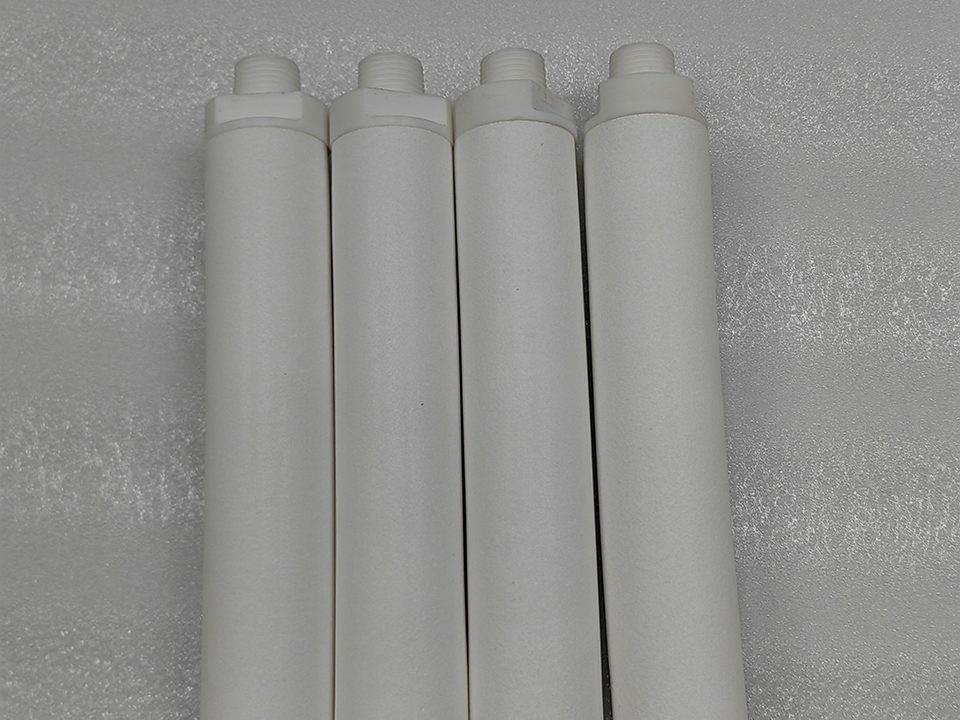
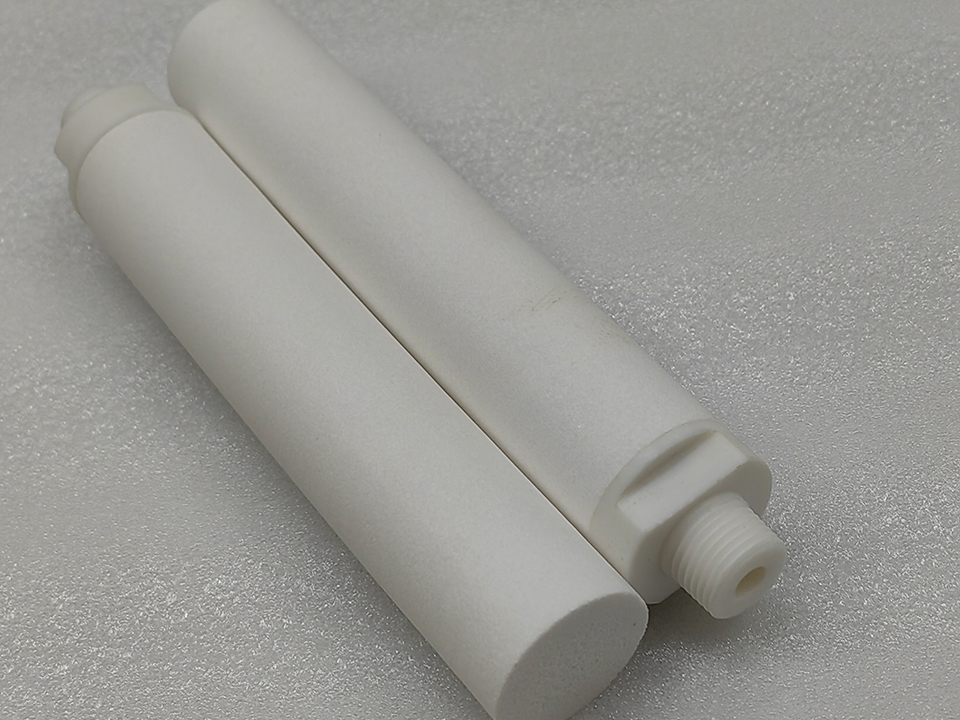
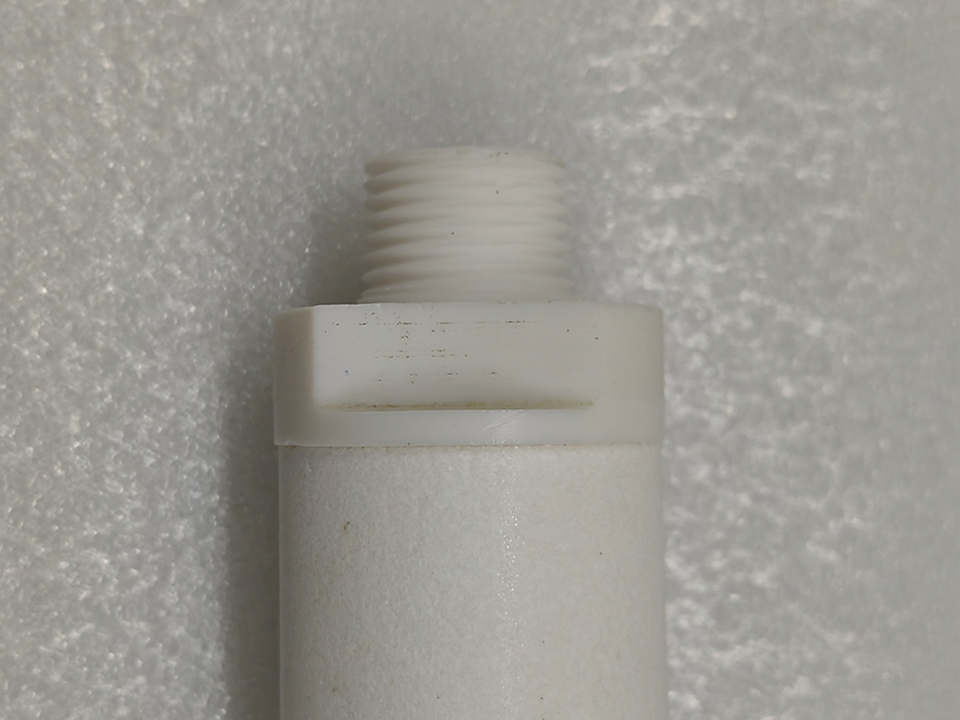
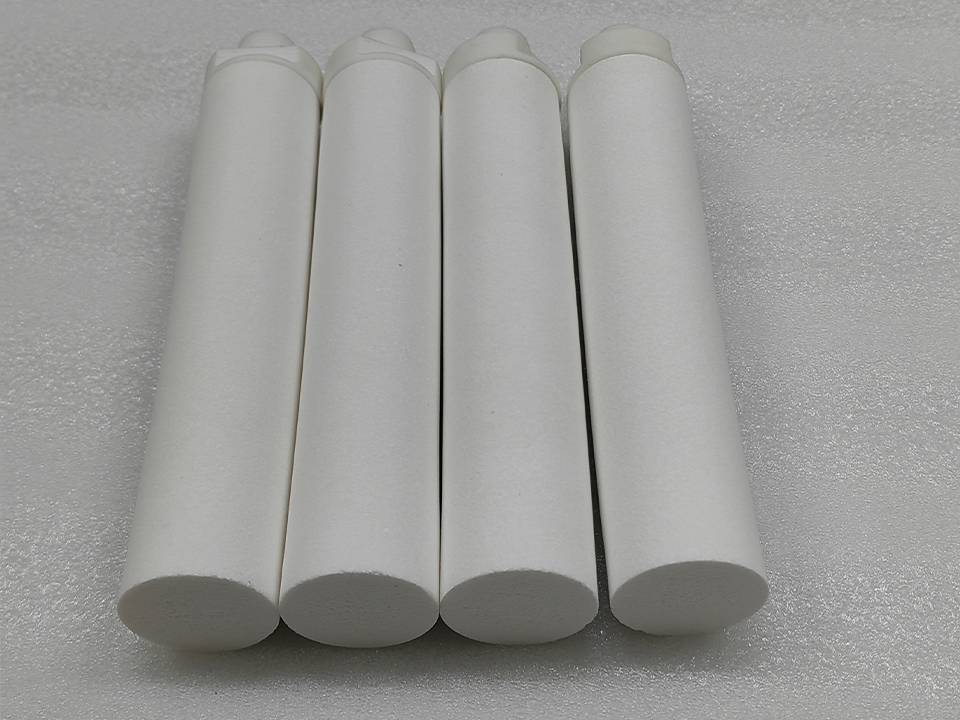
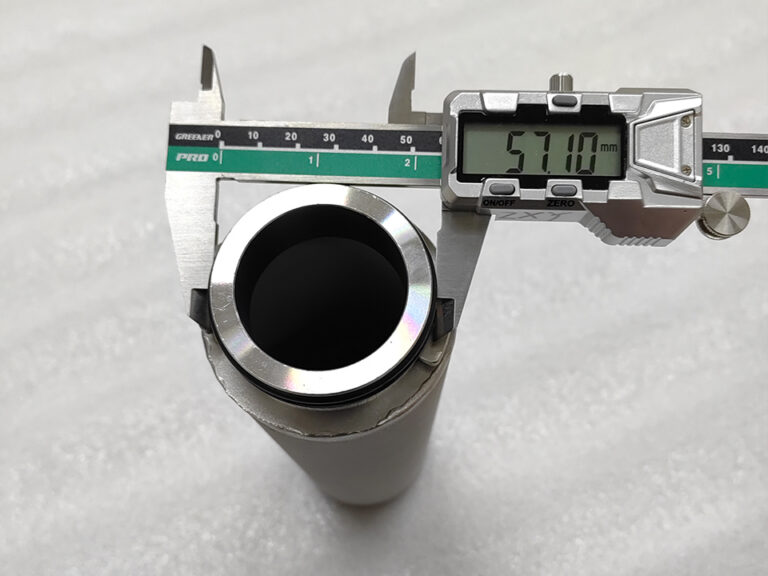
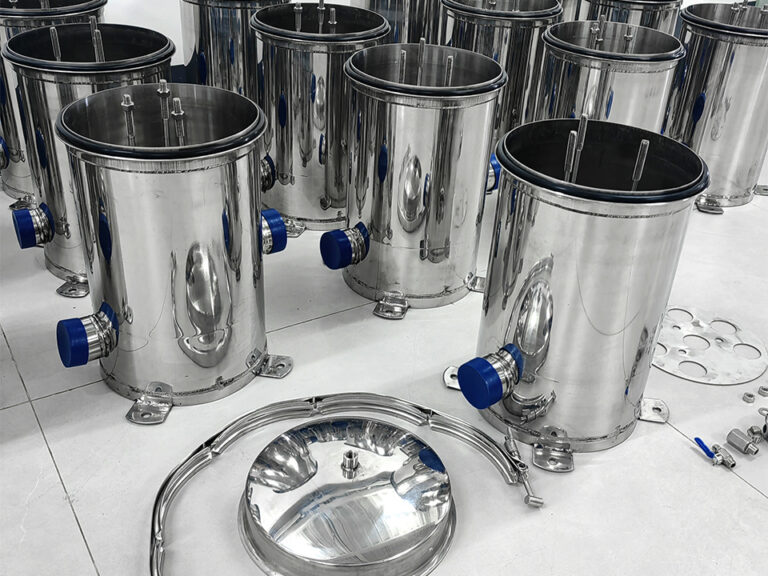
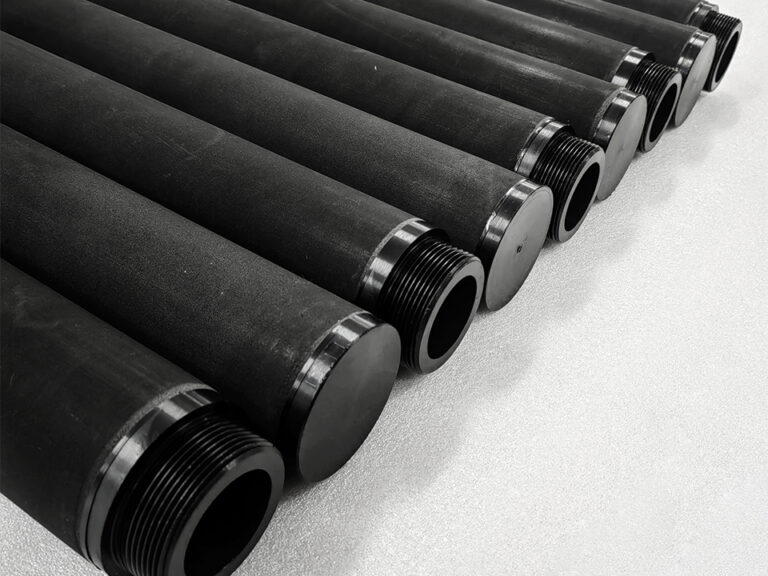
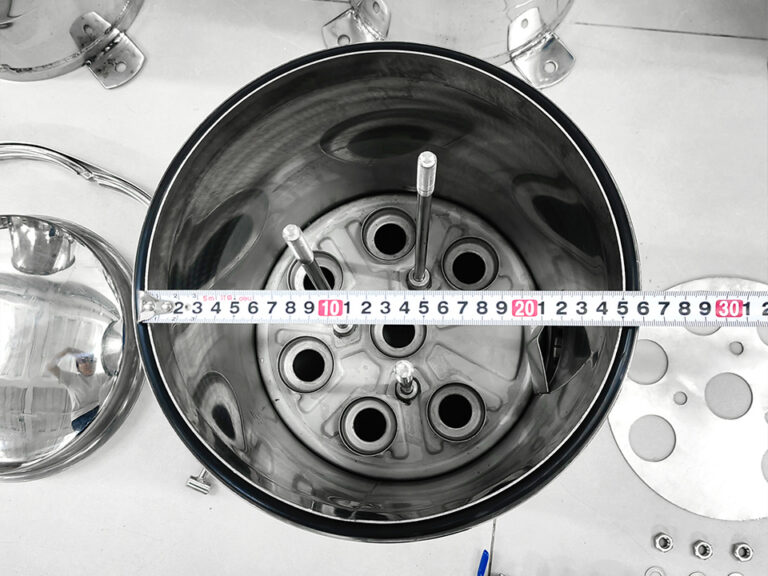
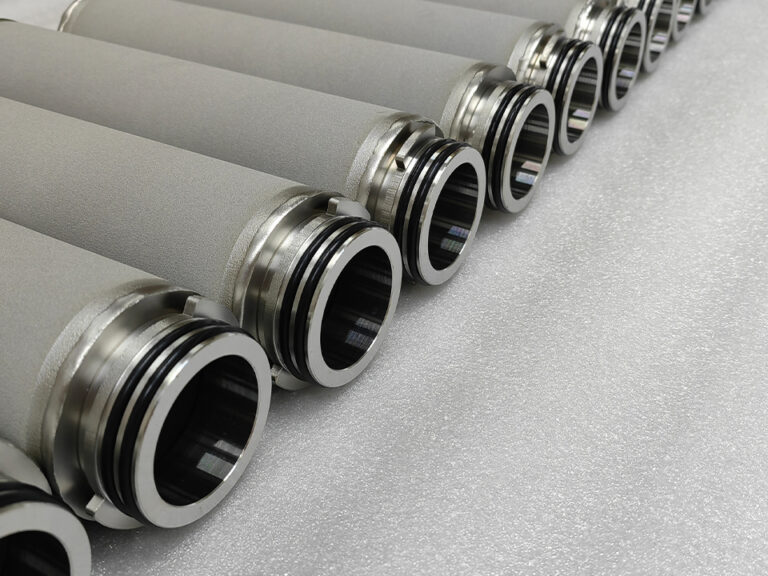
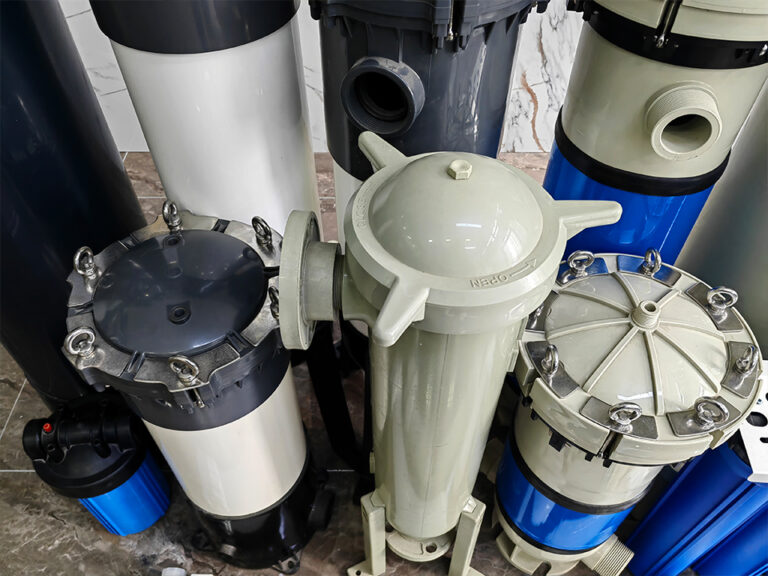
Guangzhou Lvyuan Water Purification Equipment Co., Ltd. é um fabricante de filtros industriais fundado em 2009 que projeta e fabrica carcaças de filtro de aço inoxidável, tanques de água estéril de aço inoxidável, elementos de filtro, sacos de filtro, materiais de ultra-polímero e produtos de filtro sinterizado. Os compradores escolhem a Lvyuan devido ao apoio OEM/ODM, ao controlo de qualidade ISO9001 e às certificações de vários países.
Guangzhou Lvyuan Water Purification Equipment Co., Ltd.
Especificações do cartucho de filtro «Melt Blown» que os compradores devem verificar
A Melt Blown Filter Cartridge may look like one of the simplest elements in a water-treatment system, yet its performance depends upon a chain of variables that numerous quotes press into 3 practical lines: polypropylene, 5 micron, 10 inch.
That is not a spec. It is a product description.
When I investigate a cartridge quote, I think every undefined number can become an investing in dispute later on. Is “5 micron” small or outright? At what performance? Under what flow rate? With tidy water or a thick procedure fluid? At 20 ° C or 80 ° C? Does the priced quote size include completion adapter?
A lot of weak purchases begin with unanswered questions like these.
The industry’s uncomfortable fact is that 2 cartridges carrying the same micron label can behave really differently. One might maintain fragments continually with its graded-density structure. One more might pass a big fraction of the difficulty particles, lots quickly, flaw under differential stress, or simply fall short to secure inside the real estate.
Customers should confirm performance, not vocabulary.
Thaw Blown Filter Cartridge Specifications Should Be Quantifiable
A buyer-grade spec sheet need to specify the cartridge as an operating component, not simply as a cylinder of polypropylene fiber.
At minimum, it should state:
Filter-media polymer and material grade
Nominal or absolute micron classification
Particle-retention performance at the stated micron size
Test liquid, fragment difficulty and test method
Preliminary stress decrease at a defined flow
Pressão diferencial recomendada para a substituição
Maximum allowable differential pressure
Maximum continuous operating temperature level
Precise inner diameter, external size and total size
End-cap setup
Material de vedação
Core product and collapse resistance
Extractables, fiber-shedding and material-compliance proof
Lot-traceability and assessment criteria
Consider the released array for an OEM-size PP melt blown cartridge. The available configurations include 1– 100 µm ratings, sizes from 5 to 60 inches, outer sizes around 60– 65 mm or 110– 115 mm for big versions, DOE and numerous 222/226 adapter designs, and silicone, EPDM, NBR or Viton seals. That range works, yet it also reveals why “send me your standard PP cartridge” is a negative acquisition guideline.
Tiny choices matter.
A 63 mm cartridge and a 65 mm cartridge might both fit on paper, yet real estate clearance, seal compression and bypass danger can vary. A DOE cartridge can not immediately replace a 222-fin component. And an in need of support cartridge that works at reduced stress might flaw when the differential stress increases.
The order ought to remove those obscurities prior to production starts.
Thaw Blown Cartridge Micron Rating: Nominal Is Not Absolute
The Melt Blown Cartridge Micron Score is usually the most visible number and the least comprehended.
The CDC distinguishes clearly between outright and nominal pore-size cases. An absolute 1 µm filter is meant to have pores no larger than 1 µm, while a nominal or mean 1 µm filter can include larger openings and enable some bits larger than the published rating to pass.
That distinction alters the commercial significance of a quote.
A provider stating “5 micron” ought to likewise reveal:
Whether the ranking is small or absolute
Retention efficiency at 5 µm
Challenge-particle material and distribution
Flow price during screening
Espessura e temperatura do líquido
Differential-pressure endpoint
Whether efficiency is gauged on a brand-new or conditioned cartridge
I favor efficiency information shared as a beta ratio or a straight percent. The beta proportion is determined as the upstream bit count divided by the downstream particle matter at a specified fragment dimension.
Por exemplo:
β20 corresponds to 95% performance.
β100 represents 99% efficiency.
β1,000 corresponds to 99.9% efficiency.
Now ask the difficult inquiry: when a provider prints “5 micron,” does it imply 50%, 90%, 95% or 99.9% retention at 5 µm?
Without that response, purchasers are contrasting tags instead of filters.
For regular debris pretreatment, a 10-inch 5 micron PP debris cartridge may be a functional beginning setup. The referenced design is a coreless DOE cartridge making use of polypropylene media and is offered in 1, 3, 5 and 10 µm variations. Those details define its physical format, however a purchaser still needs effectiveness and pressure-drop information for the real task factor.
And no, “smaller” is not immediately better.
Moving from 10 µm to 1 µm can enhance preliminary resistance, reduce service life and increase replacement regularity when the feed contains heavy sediment. The most effective choice is the coarsest verified rating that safeguards the downstream membrane layer, nozzle, material bed or procedure tools.
Filter Cartridge Stress Drop Forecasts Real Operating Cost
Pressure decline is where advertising language fulfills the pump.
Filter Cartridge Pressure Decline, typically created as ΔP, is the difference between inlet and electrical outlet pressure. Buyers need two different worths:
Tidy differential stress: the preliminary ΔP at a defined flow price.
Incurable differential stress: the change-out or maximum allowable ΔP after loading.
A declaration such as “low pressure decrease” is ineffective without circulation, temperature level, liquid thickness and cartridge length.
One provider specification lists optimal operating differential-pressure restrictions of roughly 4.2 kgf/cm two at 20 ° C, 2.1 kgf/cm two at 60 ° C and 1.2 kgf/cm ² at 80 ° C, with a suggested change-out worth around 2.1 bar. The decreasing limitation at higher temperature level is not surprising: polypropylene ends up being less mechanically tight as temperature level surges. But purchasers should normalize the devices and verify whether the figures relate to cored, coreless or externally supported arrangements.
This is where acquisition groups get trapped. They contrast cartridge prices yet disregard:
Pumping energy
Lost production throughout replacement
Labor and disposal
Real estate cleaning
Downstream membrane fouling
Item shed during flushing
Emergency situation stock
The most affordable unit rate can generate the highest possible price per cubic metre.
A defensible request for quote may state:
Maximum tidy ΔP of 0.15 bar per 10-inch equivalent at the defined flow, making use of water at 20 ° C, with change-out at 1.5 bar and no architectural failing listed below the concurred maximum differential pressure.
The precise numbers should fit the application. The point is to specify them.
Melt Blown Filter Cartridge Capacities Should Include Tolerances
Nominal measurements are not manufacturing tolerances.
How much axial compression does the real estate need?
A cartridge offered in custom 5-, 10-, 20-, 30- and 40-inch lengths can offer numerous housings, yet “personalized” should result in a regulated illustration, not a casual email description.
For DOE cartridges, buyers need to confirm:
Actual overall length
End-face flatness
Bore diameter
Outer-diameter tolerance
Compression allowance
Knife-edge compatibility inside the real estate
For SOE cartridges, include:
Adapter kind: 222, 226 or another interface
Fin or flat-end setup
O-ring groove dimensions
Insertion deepness
Adapter concentricity
Direction of installment
A wrong end adapter is apparent. A minimal O-ring fit is even worse due to the fact that the cartridge might show up mounted while allowing bypass.
A Lot Of PP Melt Blown Filter Cartridge products are described as being made from 100% polypropylene, often without adhesives. That building and construction is eye-catching due to the fact that polypropylene supplies wide compatibility with numerous aqueous streams and permits thermally bound fibers to create a depth-filter structure.
But “PP” is not a total material statement.
Polypropylene has CAS Pc Registry Number 9003-07-0, and the FDA notes it under several food-contact policies, including 21 CFR 177.1520. Yet FDA permission puts on specified products and conditions of use; it does not automatically certify every ended up cartridge, additive plan, pigment, end cap, O-ring or manufacturing aid.
Purchasers must ask for:
Material producer and grade
Virgin or recycled material statement
Additive and pigment disclosure
Certification of evaluation
Food-contact statement where applicable
Extractables or rinse-release information
Fiber-shedding test results
Great deal number and production day
Change-control alert agreement
The expression “FDA certified” should have special focus. Does it refer just to the base material? The media? Every wetted component? Or an unassociated distributor declaration copied into a brochure?
Get it in composing.
Seal option additionally matters. EPDM typically matches numerous water responsibilities, while FKM/Viton might be liked for certain chemicals and higher temperatures. Silicone, NBR and PTFE each have different compatibility restrictions. The right option depends on the specific liquid structure, concentration, temperature, cleaning chemistry and exposure period.
Never ever accept an O-ring by colour.
A Debris Cartridge Is Not a Universal Cleanser
A Polypropylene Melt Blown Filter Cartridge is normally a debris prefilter. It catches suspended solids such as sand, corrosion, silt and various other particle matter. It must not be presented as an universal remedy for liquified salts, PFAS, lead, chemicals, chlorine, infections or every microbial risk.
The distinction has actually become harder to neglect.
A July 2023 USGS study estimated that at least 45% people tap water could have several PFAS substances; researchers examined for 32 PFAS types although greater than 12,000 have been recognized. A standard 5 µm polypropylene debris cartridge is not, on its own, a confirmed PFAS-removal innovation.
In April 2024, the EPA established enforceable limits of 4.0 components per trillion for PFOA and PFOS under its PFAS drinking-water regulation and approximated that the law might reduce exposure for about 100 million individuals in time. Those concentrations are a pointer that a visible-particle filter and a dissolved-contaminant therapy system do different tasks.
A purchaser selecting the best thaw blown filter cartridge for water filtering should as a result define its setting in the treatment train. A PP sediment stage might safeguard downstream granular activated carbon, carbon block, ultrafiltration or reverse-osmosis components; it does not inherit the removal cases of those later stages.
NSF makes the same more comprehensive point from an accreditation point of view. Residential therapy standards are volunteer, and certification to one criterion or claim does not suggest a product eliminates every feasible impurity. NSF/ANSI 42 typically covers aesthetic impacts, while NSF/ANSI 53 addresses specified contaminants with wellness effects. Customers need to verify the exact design and specific decrease insurance claim.
A sediment filter removes sediment. That sentence ought to not be debatable.
Exactly how to Pick a Melt Blown Filter Cartridge From Feedwater Information
Exactly how to Choose a Melt Blown Filter Cartridge? Start with the water, not the catalogue.
I would request for these running inputs before recommending a configuration:
Fragment tons and distribution
A research laboratory particle-count circulation is even more useful than “water looks filthy.” Record particle focus across arrays such as:
More than 100 µm
50–100 µm
20–50 µm
10– 20 µm
5– 10 µm
1- 5 µm
Hefty rugged solids may warrant a strainer, bag filter or 50– 100 µm initial stage prior to the melt-blown cartridge. Or else, the deepness filter may end up being a costly non reusable dust container.
Flow per cartridge
Flow needs to be stated per 10-inch equivalent, not merely as overall system circulation. A 40-inch cartridge provides approximately four 10-inch equivalents, but the functional capacity will certainly still rely on media thickness, pollutant circulation, housing hydraulics and differential-pressure restrictions.
Liquid residential properties
Specify:
Minimum and optimal temperature
Espessura
pH
Conductivity or salinity
Oxidants
Solvents
Oils
Surfactants
Cleaning up chemicals
A cartridge suitable for ambient municipal water might not suit warm caustic cleansing, concentrated brine or solvent-containing process liquid.
Downstream protection target
An RO membrane, spray nozzle, UV activator, carbon bed and last membrane layer do not need the exact same pretreatment. Define what need to be safeguarded and which particles cause the failing.
For commercial duties, 1, 5 and 10 micron PP debris filter cartridges are offered in slim and big styles. Selection ought to comply with a pilot or controlled contrast using genuine feedwater whenever cartridge intake or downtime materially influences running price.
Purchaser Confirmation Table for Melt Blown Filter Cartridge Specs
Requirements
Minimum proof customers ought to request
Typical warning
Acquisition approval criterion
Pontuação Micron
Nominal or outright classification plus performance curve
“5 micron” with no effectiveness
Defined retention portion at mentioned fragment size
Test technique
Difficulty dust, fluid, circulation, temperature and endpoint
Inner test without procedure
Reproducible method affixed to technical offer
Tidy stress decrease
ΔP contour across anticipated circulation range
“Reduced stress decrease”
Optimum ΔP at defined circulation and temperature
Change-out stress
Recommended incurable ΔP
No replacement criterion
Agreed operational change-out value
Collapse toughness
Optimum ΔP by temperature and support condition
One pressure number for each temperature
Safety margin above procedure maximum
Medidas
Managed drawing with tolerances
“Criterion 10 inch”
Housing-compatible dimensions and compression
Fim da ligação
DOE, 222, 226, fin or level
Product picture used as specification
Written adapter code and attracting
Produto de selagem
Exact elastomer quality and compatibility declaration
“Rubber O-ring”
Authorized product for fluid, temperature and cleaning
Media make-up
Resin quality and additive statement
“100% PP” without sustaining documents
Traceable wetted-material affirmation
Peso do cartucho
Target weight and tolerance where pertinent
Weight changes between production whole lots
Concurred tolerance linked to building
Fiber release
Flush or losing test results
“No fiber dropping” without data
Defined rinse quantity and particle-release restriction
Qualificação
Certification number, model range and issuing body
Logo displayed without searchable scope
Certificate matches exact item and claim
Rastreabilidade
Great deal code, day and examination documents
Unmarked cartridges
Whole lot recognition on item or packaging
Life span
Capability examination or area trial under depictive loading
Surefire months without feedwater data
Efficiency shared by throughput or incurable ΔP
Below is my toughest procurement opinion: do not ask providers for “highest quality.” Inquire for numbers that can fail inspection.
Quality ends up being enforceable only when it is quantifiable.
Thaw Blown Filter Cartridge FAQs
What is a Melt Blown Filter Cartridge?
A Melt Blown Filter Cartridge is a depth-filtration element made by thermally bonding fine polypropylene fibers into a graded-density cyndrical tube that catches put on hold solids via its thickness, normally serving as debris pretreatment as opposed to as a qualified obstacle for liquified chemicals, steels, viruses or PFAS.
Its external layers are often extra open, enabling larger bits to get in the media, while denser inner layers record finer particles. This graded framework can supply higher dirt-holding ability than a solitary consistent surface area layer, offered the fiber distribution and thickness continue to be consistent.
What is the most effective Melt Blown Cartridge Micron Rating?
The best Melt Blown Cartridge Micron Rating is the coarsest validated rating that protects downstream tools while maintaining acceptable differential stress and service life; for lots of pretreatment obligations that might be 5– 10 µm, however feedwater particle circulation and called for retention effectiveness must make a decision the choice.
A 1 µm cartridge might record finer particles yet tons quicker. A 20 µm cartridge might last longer but fail to secure a delicate membrane or nozzle. Pilot screening should compare filtrate high quality, throughput and incurable ΔP as opposed to colour alone.
What is the distinction between nominal and absolute micron scores?
A nominal micron rating describes an approximate particle-retention performance under a stated test method, whereas an outright score determines a much tighter maximum-particle passage criterion; without the supplier’s efficiency percent, difficulty dirt, flow, thickness and endpoint pressure, neither tag is commercially risk-free to contrast.
Purchasers need to ask for a particle-efficiency curve or beta-ratio data. 2 nominal 5 µm cartridges might have materially various effectiveness and dirt-holding abilities.
What does Filter Cartridge Stress Decline indicate?
Filter Cartridge Pressure Drop is the stress difference gauged in between the upstream and downstream sides of the set up cartridge at a defined circulation, temperature and fluid viscosity, and it is the operating number purchasers must track because increasing differential pressure signals packing, energy loss, bypass risk or architectural anxiety.
Procedure clean ΔP after appointing and pattern it during procedure. Sudden changes may indicate unusual solids packing, inaccurate valve settings, directing, cartridge contortion or instrumentation problems.
Does FDA-compliant polypropylene make a cartridge drinking-water certified?
FDA-compliant polypropylene means the certain material and additives are accredited for defined food-contact problems under suitable policies, not that the finished cartridge has been separately certified for drinking-water safety and security, removal restrictions, impurity reduction or every chemical and temperature level condition in the buyer’s procedure.
Demand documents covering every wetted element. A compliant base resin does not immediately validate the completed media, core, end caps, seals, pigments, refining aids or making environment.
Exactly how commonly should a PP Melt Blown Filter Cartridge be changed?
A PP Melt Blown Filter Cartridge should be replaced when it gets to the validated incurable differential stress, fails to keep the needed filtrate top quality, reaches a hygiene-based time limit or completes the maximum service interval specified for the procedure, whichever problem takes place initially.
Calendar-based substitute alone is weak method due to the fact that sediment tons fluctuate. Differential-pressure monitoring and regular downstream particle checks give a more defensible basis for change-out choices.
Ask For a Specification-Controlled PP Filter Cartridge Quote
Do not send out a vendor just a micron rating and amount.
Send the feedwater information, required flow, real estate illustration, cartridge measurements, end link, seal product, operating temperature, clean-pressure-drop limit, change-out point, retention target and documentation requirements. For repeat orders, add whole lot traceability, approved resistances and change-control terms.
Then request samples.
Run them versus actual feedwater. Record first ΔP, throughput, filtrate particle matter, packing behaviour and last cartridge problem. Cut one open after evaluating if the application matters sufficient. The internal loading pattern frequently discloses more than the brochure.
A Melt Blown Filter Cartridge is affordable just when it carries out predictably. Validate the numbers prior to authorizing the price.